
- Emma Parker
- March 20, 2026
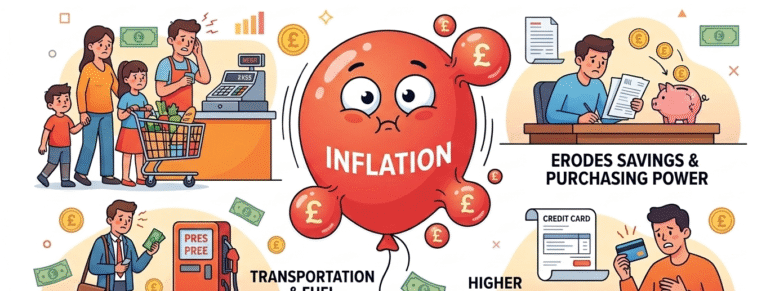
Inflation feels like a complicated term that we think economists and finance professionals usually discuss. But in reality, it is something that affects our day-to-day life. Besides the statistical predictions of inflation, there are several straightforward factors that define its role.
INFLATION AFFECTS YOUR FINANCES EVERY SINGLE DAY
The best way to understand the terms of economics is to know its relevance to your daily life. From morning routine hustle to weekend getaway planning, inflation dominates everything.
From daily essential expenses to loan interest rates. Banks follow it quite seriously. This is why borrowers search for alternative lending solutions with flexible rates and repayments. The online small 1000 Pound Loans with low-interest rates in the UK are a popular choice.
Direct lenders have their own funding sources. They compete with mainstream lenders to sustain, hence they always offer customised rates. This is why, if you know about the right ways, finding ways out gets easier.
Here is a guide to explain inflation and its role in your daily life.
What is inflation?
Inflation is a gradual rise in the price of all products and services. With a rise in inflation, the price hike gets aggressive. It is a situation that makes you purchase things at a higher cost as compared to their prices in the past.
Example – You purchase a loaf of bread today at £1.00 per loaf. Next year, due to price hikes, the same loaf may cost you £1.40 per loaf.
This change may look small. But price increases happen for all goods and services. Hence, in totality, that consumes a considerable share of your income.
Impact of inflation on daily finances
Let’s understand how your personal finances get affected due to volatile price hikes.
-
Rise in grocery bills
Grocery is an FMCG category, which is Fast Moving Consumer Goods. You cannot avoid it, and due to inflation, everything gets costlier. In totality, when you make a grocery budget, the difference is noticeable. Your wallet gets lighter for this one factor quite easily. But if you spend wisely and stop buying things that you already have, saving is possible.
-
Fuel price hike makes daily commute expensive
Fuel prices are always a big concern in this urbanised world. Millions of people travel on a daily basis to their workplaces. Are you among them? If yes, you have surely experienced the effect multiple times.
From your kitchen to your car or two-wheeler, the change and worry are clear. Choose public transport or try carpooling if you are comfortable.
-
Debt management gets complicated
Let’s be rational. In modern times, debts are among the biggest concerns. The majority of individuals and families today struggle with multiple instalments.
Your credit purchasing power reduces, and also your repayment ability. When you are spending more on essential expenses like groceries, daily commute, gas and electricity bills, debt repayment is a challenge. You struggle while getting a new loan and repaying the existing ones.
-
Increase in housing costs and rent
Now the roof over your head will make you spend more. A property value hike makes you borrow a bigger mortgage. While rent prices too reach a new height. Property tax increases, and also the costs for repair and utilities increase.
All these factors put an additional burden on your monthly budget. As a result, you need to plan again for all expenses. If you have a family with kids, the challenge is even bigger.
-
Healthcare and education costs go up
Inflation does not leave anything untouched. A person in urgent medical need does not know what price hikes are. Similarly, education cannot wait until you stabilise your finances.
The only option is to take care of your health to avoid medical expenses. For education, some expenses can be avoided, such as avoiding the purchase of new textbooks. Borrow them from your seniors. Never buy expensive stationery material or unnecessary course books.
-
Savings and investments lose their value
If your nest eggs are saved in a low-interest account, the return on investment will be embarrassing. Example – your savings account gives 3% return, and inflation is 5%, the invested money shows a considerable loss.
Hence, be cautious about where you are putting the funds. Prepare a risk mitigation strategy against inflation. Such situations specifically hurt fixed-income individuals more severely. Investments, too, may show a lower return.
-
Financial mistakes you should never make during inflation
Caution is required to reduce the risk and effect of price hikes on your income and monthly budget. Follow the tips below to keep your savings and goals less affected.
- Ignoring budget adjustments – Inflation gradually but strongly reduces your purchasing power. Hence, not working on your monthly budget is foolish.
- Not preparing an emergency fund – This is one of the common mistakes people make. Are you also repeating this common pitfall? Never do that to your finances, and always create a financial cushion.
- Prioritising lifestyle upgrades over debt payments – You chase trends, and buying new furniture is more important for you than paying a debt. Soon, you will see your finances turning upside down. It means you may soon need to empty your savings to pay debts. Strengthen repayment ability by spending wisely.
- Not working to improve property value
In place of spending on unnecessary or luxury things, spend on realistic causes. Renovate or upgrade your home, and it will improve its value. Later, you can sell the property at a higher price. Search for how to get a loan for home renovation at affordable rates online and find plenty of options.
Conclusion
You need to be ready with a crisis management plan for personal finances. Having a backup ready is the best way to beat inflation or any financial challenge. From making smart borrowing decisions to working regularly, tiny efforts matter a lot.
The globalised world is affected by anything happening even in the other part of the world. A war, recession, or natural calamity in another country can affect you in another nation. Hence, plan well, save more, and spend wisely.

Emma Parker is a financial counsellor at LondonLoansBank and has been serving for over 5 years. She is a psychology graduate from the University of Glasgow. Since she has keen interest in the finance field, she pursued a diploma course in banking and finance that led her to opt for her current career. She assists people choose the best loan based on their current financial situation and credit score. As Emma understands how people react to money problems, she gives them a helping hand to solve their financial complications.
Recent Posts

May 28, 2026

March 20, 2026

March 18, 2026

February 23, 2026

February 18, 2026

January 22, 2026

January 12, 2026

January 10, 2026

December 23, 2025